
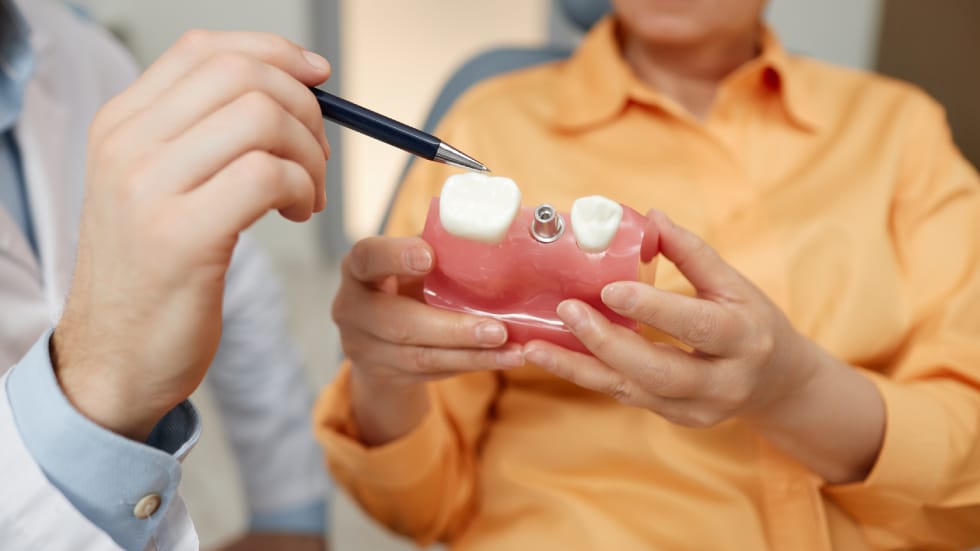
Dental implants are usually maintained for 25+ years, with many being preserved for a lifetime when proper care is provided. Crown portions are typically replaced every 10-15 years; however, the titanium implant post can be kept functional indefinitely with good oral hygiene and regular dental checkups.
Fast Facts
- A 95-98% success rate over 10 years is achieved by titanium implant posts
- Crown replacements are needed roughly every 10-15 years on average
- Implant life beyond 25 years can be extended by proper oral hygiene
- Implant lifespan gets reduced by up to 40% through smoking
- Complications are prevented by regular dental visits every 6 months
Understanding Implant Longevity
Several interconnected factors determine the lifespan of dental implants. Forever is what most patients expect their implants to last, but different components with varying lifespans are involved in the reality. Decades or even a lifetime can be achieved by the titanium implant post, which gets surgically placed into your jawbone. Yet every 10-15 years, the crown that sits on top typically needs replacement due to normal wear and tear.
Patients are surprised to learn that implant maintenance differs slightly from natural tooth care, in many cases. Cavities won’t develop in the implant itself; however, infection and inflammation can still affect the surrounding gum tissue.
The Science Behind Implant Durability
A process called osseointegration is how titanium implants work. Over several months, your jawbone literally grows around and fuses with the implant surface. Remarkable stability that can withstand normal chewing forces for decades gets created by this biological bond. At the 10-year mark, success rates exceeding 95% are shown by research for properly placed implants.
This fusion process can be disrupted by poor oral hygiene, smoking, or certain medical conditions, however. Once it’s established, the bond remains strong as long as healthy conditions are maintained by the surrounding bone and gum tissue.
Daily Care That Makes the Difference
Implant longevity gets directly impacted by your daily routine. Scratching of the crown surface gets prevented by brushing with a soft-bristled toothbrush while plaque is removed effectively. Premature wear of the crown material gets protected against by non-abrasive toothpaste. Extra attention is required by flossing around implants since food particles can accumulate along the gum line.
Increasingly popular among implant patients, water flossers have become common. Gentle yet thorough cleaning around the implant site gets provided without sensitive gum tissue being irritated. This approach is found more comfortable than traditional floss by many of our Oshawa patients.
Professional Maintenance Requirements
Early detection of potential problems gets allowed by regular dental visits every six months. Hardened plaque that might be missed by home care gets removed through professional cleanings. Signs of peri-implantitis, bone loss, or crown wear can be spotted by your dental team before serious issues develop.
Implant stability gets checked during these visits; surrounding gum tissue gets examined, and crown condition gets assessed. Bone levels around the implant are monitored through X-rays. Simpler, less expensive treatments often result when problems are caught early. Interesting how that works.
Lifestyle Factors That Impact Lifespan
Implant success rates and longevity get significantly reduced by smoking. Blood flow to the gums gets restricted by nicotine, which impedes healing and increases infection risk. Excessive force gets put on implants by teeth grinding, potentially loosening the crown or damaging surrounding bone. Your investment can be protected by a custom night guard.
Diet also plays a role. Crowns can be chipped by hard foods like ice or popcorn kernels. The crown may get pulled by sticky foods. Without major lifestyle changes, most patients adapt their eating habits slightly.
When Replacement Becomes Necessary
The most common maintenance need is crown replacement. Durable but not indestructible describes modern ceramic materials. The surface gets gradually worn down by normal chewing, and over time, staining may occur. Since the implant post remains stable, I suppose, the replacement process is typically straightforward.
Less common but possible is complete implant failure. Poor healing or infection during the initial months often results in early failures. Bone loss around the implant due to gum disease or excessive force usually involves late failures.
Maximizing Your Investment
The foundation for long-term success gets set by proper care from day one. Proper healing and osseointegration gets promoted by carefully following post-surgical instructions. Complications that lead to implant failure are prevented by maintaining excellent oral hygiene. Problems get caught while they’re still manageable through regular dental visits.
Personalized maintenance plans that fit their lifestyle and needs are developed by working closely with our patients at King Ritson Dental Clinic. Visit our website to learn more about our comprehensive implant care services and schedule your consultation today.
Mini-FAQ
Q: What affects how long my dental implant will last? The biggest role is played by your oral hygiene routine. Peri-implantitis gets prevented by brushing twice daily, flossing, and using an antibacterial rinse. Lifespan can be shortened significantly by smoking, teeth grinding, and skipping dental visits. That still surprises people.
Q: Do I need special care for dental implants? Look, similar care to natural teeth is needed by implants. A soft-bristled toothbrush and non-abrasive toothpaste should be used. Great results around implants are provided by water flossers. Every six months, regular cleanings are essential.
Q: When do implant crowns typically need replacement? Over time, crown materials get worn down from normal chewing and use. Before significant wear is shown, most ceramic crowns last 10-15 years. The implant post underneath usually remains perfectly functional.
Q: What happens if my implant fails? Fair point to ask about this. Poor healing or infection often causes early failures. Bone loss around the implant usually involves late failures. During routine checkups, most issues are caught early and can be addressed.