
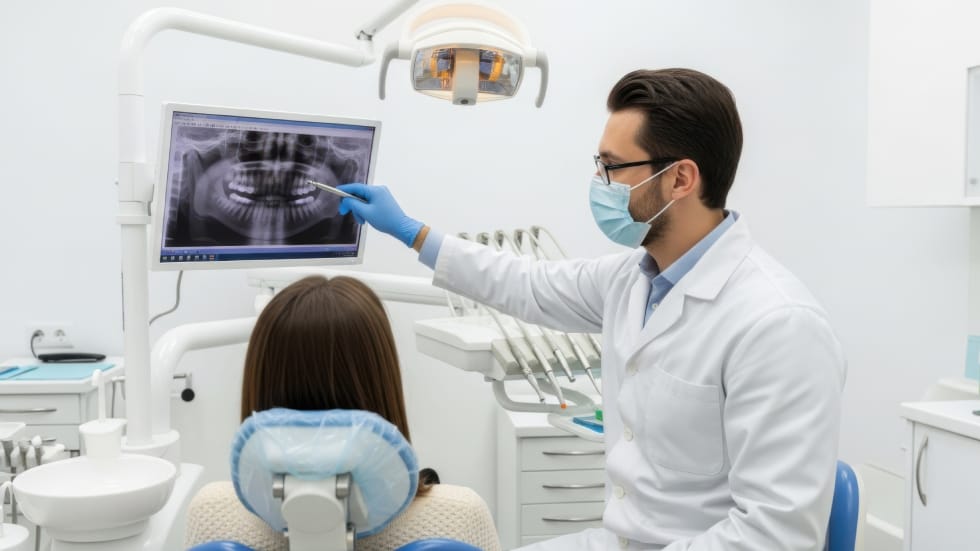
When used responsibly, dental X-rays are generally safe; minimal radiation exposure is produced by modern digital systems. Protective measures like lead aprons are taken by most dentists, and X-rays are limited to necessary cases… the radiation from a typical dental X-ray equals roughly what you’d get from a cross-country flight.
Fast Facts:
- 80% less radiation is produced by digital dental X-rays than traditional film X-rays
- About 0.005 millisieverts of radiation is what you’re exposed to from a typical bitewing X-ray
- Radiation safety training must be completed by dental professionals every 2 years
- Up to 95% reduction in radiation exposure to other body parts can be achieved with lead aprons
- X-rays are recommended by the American Dental Association only when clinically necessary
Understanding Modern X-Ray Technology
How dental practices operate has been changed by digital X-ray systems. Significantly less radiation is produced by these newer machines than older film-based systems; the images appear instantly on computer screens. Years ago, most Oshawa dental clinics switched to digital technology. The image quality is often better too. Problems can be spotted earlier by dentists. Plus, no chemical processing is involved, making the whole process more environmentally friendly.
Radiation Levels in Perspective
Surprisingly low is the radiation exposure from dental X-rays. About the same amount of radiation you’d get from eating 10 bananas or spending a few hours at high altitude is delivered by a single bitewing X-ray. We are exposed to roughly 2-3 millisieverts per year from background radiation from natural sources. In comparison, only about 0.15 millisieverts is added to your annual exposure by a full mouth series of dental X-rays. That puts things in perspective, I suppose.
Safety Protocols at King Ritson Dental Clinic
Strict radiation safety guidelines are followed by our team for every patient. Lead aprons are positioned carefully before any X-ray procedure; thyroid collars are used when appropriate. The X-ray equipment gets calibrated regularly. Exposure times are kept to the minimum needed for clear images. Radiation monitoring badges are worn by staff members, and ongoing safety training is received by them. Over decades of research and practice, these protocols have been developed.
When X-Rays Are Actually Necessary
X-rays aren’t ordered randomly by dentists. They’re typically needed to check for cavities between teeth, monitor bone levels around dental implants, or assess wisdom tooth development. Immediate X-rays might be required by emergency situations to diagnose fractures or infections. For routine checkups, X-rays are needed by most patients every 12-24 months, depending on their oral health history. More frequently might children need them as their teeth develop.
Special Considerations for Different Patients
Extra consideration is received by pregnant patients when X-rays are being discussed. While the radiation levels are minimal, most dentists prefer to wait unless there’s a dental emergency. Modified X-ray schedules might be needed by patients with certain medical conditions or those taking specific medications. Adjusted exposure settings and additional protective equipment are required by children. Each situation gets evaluated individually, to be fair.
Benefits vs. Risks Assessment
More extensive treatments later are usually prevented by early detection of dental problems. Just a simple filling might be needed by a small cavity caught on an X-ray, while a root canal or extraction could eventually be required by the same cavity left untreated. The radiation risk from diagnostic X-rays is considered negligible compared to these potential benefits. The diagnostic value far outweighs the minimal radiation exposure involved, according to most dental professionals.
Making Informed Decisions About Your Care
Comfortable discussing X-ray recommendations with their dental team should patients feel. Informed decisions about your treatment are helped by understanding why specific X-rays are needed. If radiation exposure concerns you, the specific benefits expected from the recommended X-rays can be explained by your dentist. At King Ritson Dental Clinic, we’re always happy to discuss these details with our Oshawa patients. Visit our website to learn more about our comprehensive dental services and safety protocols.
Mini-FAQ:
Q: How often should I get dental X-rays? X-rays are needed by most adults every 1-2 years, though this varies based on your oral health history. More frequent X-rays might be needed by patients with gum disease or frequent cavities. A schedule will be recommended by your dentist based on your specific needs.
Q: Do children need special protection during X-rays? Fair point. Radiation affects children more sensitively, so smaller X-ray beams and shorter exposure times are used by dentists. Lead aprons and thyroid collars are standard. That still surprises people.
Q: What happens if I’m pregnant? Look, routine X-rays will be postponed by most dentists during pregnancy unless there’s a dental emergency. The radiation is minimal, but it’s better to be cautious during the first trimester.
Q: Can I refuse dental X-rays? X-rays can be declined by you, though your dentist’s ability to detect problems early might be limited by this. Some issues like cavities between teeth can’t be seen without X-rays.